7 Things That Quietly Stall Muay Thai Beginners the Most
Quick Answer: Beginner Muay Thai progress most often stalls from checking kicks with the wrong part of the shin, neglecting shin conditioning consistency, holding tension in the shoulders during combinations, skipping footwork drills in favor of just hitting pads, and inconsistent clinch practice — all fixable habits, not a lack of natural ability, and all addressable with specific, targeted adjustments rather than just training harder.
Most beginners assume slow progress means they need to simply train harder or more often. Usually, it’s one or two specific, correctable habits quietly limiting everything else. Here are the seven most common ones.

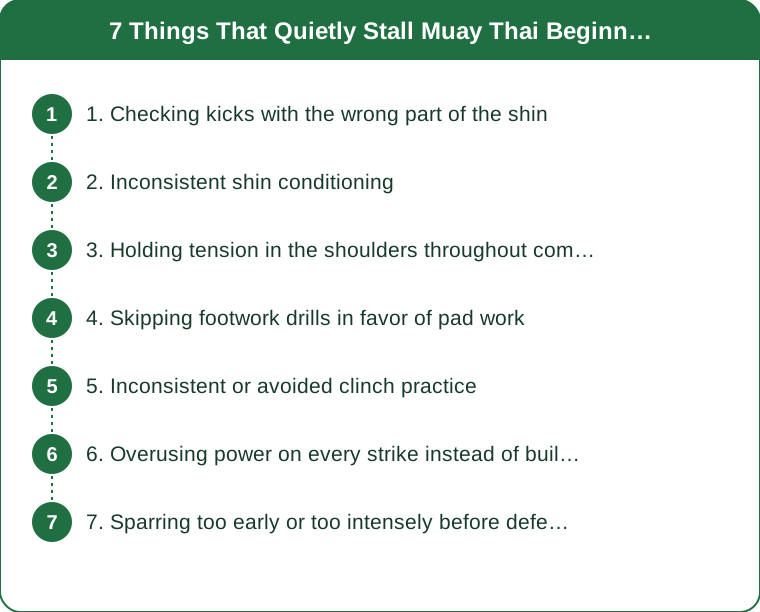
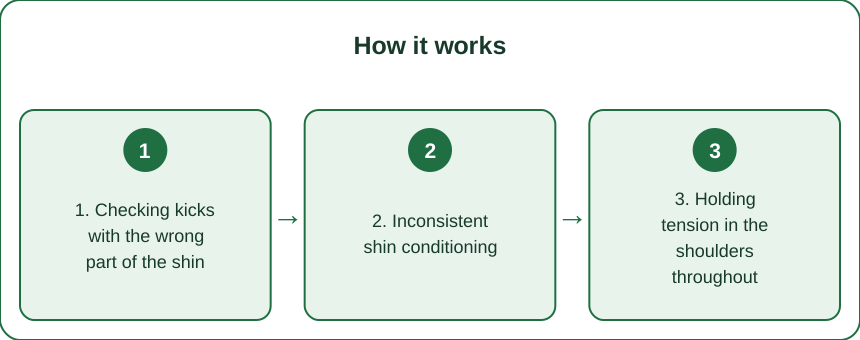
1. Checking kicks with the wrong part of the shin
Checking (blocking) a kick with the wrong shin angle transfers more impact than it should and increases injury risk without actually improving defense — proper checking technique uses a specific shin angle and raised knee that most beginners don’t naturally find without direct correction from a coach.
2. Inconsistent shin conditioning
Sporadic, intense shin conditioning sessions (rather than gradual, consistent exposure) can actually cause more soft tissue damage than benefit, since bone and periosteum adaptation happens gradually with consistent moderate exposure, not occasional harder sessions that don’t allow proper recovery between them.
3. Holding tension in the shoulders throughout combinations
Tense, raised shoulders during striking combinations slow hand speed and increase fatigue significantly faster than a relaxed, ready position between strikes — this is one of the most common beginner tells, and coaches often spot it before the beginner even notices they’re doing it.

4. Skipping footwork drills in favor of pad work
Pad work feels more like ‘real training,’ but footwork is the foundation that makes striking power and defensive positioning possible in the first place — beginners who skip dedicated footwork drills often plateau on power and balance despite putting in significant pad-work hours.
5. Inconsistent or avoided clinch practice
Clinch work feels awkward and physically uncomfortable for most beginners, leading many to unconsciously avoid it in favor of striking-only practice — but clinch fundamentals build core strength, balance, and control that directly transfer to overall striking stability.
6. Overusing power on every strike instead of building technique first
Beginners eager to hit hard often sacrifice proper form for power on every strike, reinforcing incorrect technique patterns that become harder to correct the longer they’re practiced at full power rather than being refined first at a controlled pace.
7. Sparring too early or too intensely before defense fundamentals are solid
Entering live sparring before basic defensive footwork and checking are reliable can reinforce poor habits under pressure (flinching, dropping guard) that then need to be unlearned later — many gyms deliberately delay live sparring specifically for this reason, which beginners eager to spar sometimes misread as being held back unfairly.
TL;DR:
- Checking technique errors and inconsistent shin conditioning are two of the most common physical stallers
- Shoulder tension during combinations quietly slows hand speed more than beginners realize
- Skipping footwork and avoiding clinch work both limit progress that pad work alone can’t fix
- Prioritizing power over technique early, and sparring too soon, both reinforce habits that are harder to unlearn later
FAQ: Muay Thai Beginner Progress, Answered
How long does it typically take to notice real progress in Muay Thai?
Most beginners notice meaningful technical improvement within 2-3 months of consistent training, though full comfort with clinch and sparring often takes longer.
Is it normal for shins to hurt during the early conditioning process?
Some discomfort is expected as conditioning builds gradually, but sharp or lasting pain suggests conditioning is progressing too fast and needs to be scaled back.
Should beginners ask for feedback on these specific habits directly?
Yes — most coaches can identify which of these seven is the biggest limiting factor for a specific beginner faster than the beginner can self-diagnose it.
Keep Reading
This article is for general informational and styling purposes only. Fit, sizing, and product availability may vary.